
Local SEO Case Study
Electrical Contractor —
Local SEO & Maps
for Service Calls
How we helped a Denver electrical contractor improve Google Maps visibility, generate more qualified calls, and book more jobs.
- IndustryElectrical Contractor
- MarketDenver, Colorado
- ScopeLocal SEO, GBP, Local Pages, Reviews
- Timeline16 Weeks
2257+159%
vs. baseline period58123+112%
vs. baseline period$79$46-42%
vs. baseline periodMetrics compare the pre-engagement baseline with the final measured period of the 16-week engagement (period averages). The client is represented with a fictional business name to protect confidentiality.
The business context
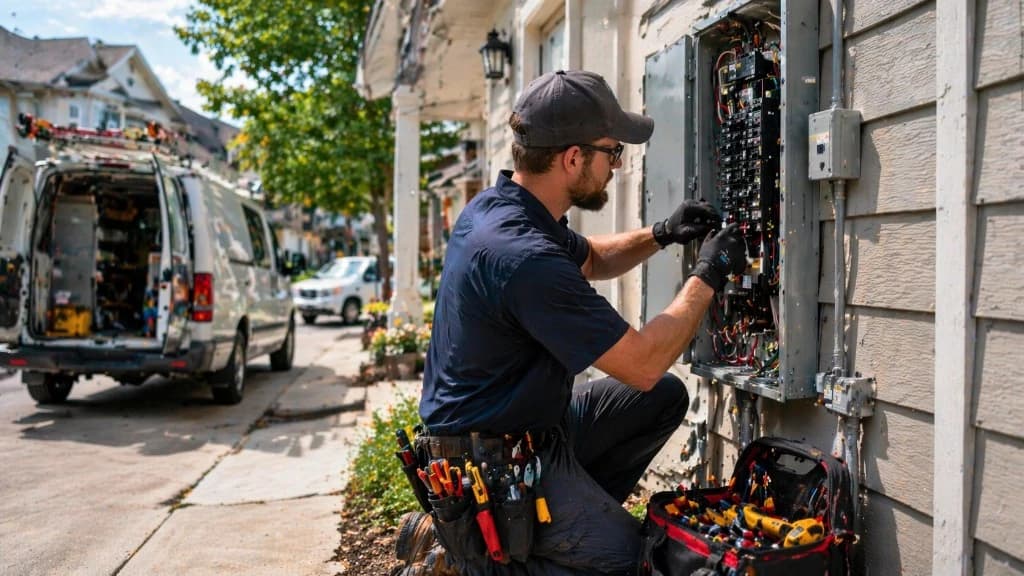
VoltWise Electrical is a fictional name for a Denver-area residential electrical contractor serving homeowners across the metro with service calls, panel upgrades, and emergency work.
Demand arrived through a mix of Google Maps discovery, local search, and referrals. Paid search was not the growth lever for this engagement—the priority was organic Maps and local relevance that produced qualified calls the dispatch team could book.
Success needed clearer category and service targeting, less self-competition across suburb pages, and a reputation system that kept pace with completed jobs—so map visibility translated into booked estimates.
The problem
Incomplete GBP service structure
The Google Business Profile service list did not fully match the work trucks actually rolled for—especially panel upgrades versus emergency response.
Homeowners searching high-intent electrical terms saw weaker relevance signals, which limited map-pack eligibility and call volume for profitable job types.
Weak suburb and neighborhood relevance
Neighborhood and suburb cues were thin relative to how Denver homeowners search and how Maps evaluates local proximity and topical fit.
Competitors with clearer local presence captured calls from serviceable zip codes even when VoltWise could fulfill the work.
Duplicate or overlapping local pages
Multiple suburb landing pages covered overlapping intents and competed with each other for the same queries.
Internal competition diluted rankings, confused crawl signals, and sent traffic to weaker conversion paths.
Review velocity below job volume
Completed jobs outpaced the rate of new Google reviews, so social proof lagged behind actual capacity and quality of work.
Lower review momentum reduced trust on the listing and weakened conversion from map views into calls.
Diagnosis
Before changing tactics, we reviewed the signals that decide local visibility and lead quality:
- Google Business Profile categories and service lists
- Service descriptions versus actual truck-roll mix
- Local ranking and map-pack visibility patterns
- On-site page architecture and suburb URL overlap
- Neighborhood and service-area content depth
- Citation consistency
- Review volume relative to job throughput
- Call tracking and lead attribution hygiene
- Search intent for emergency versus planned electrical work
Strategy
Building the foundationfor a local growth system
We designed a local growth system that aligned Google visibility, website structure, reputation signals, and tracking into one connected acquisition engine.
GBP Authority
Strengthen Google Business Profile authority by aligning services, categories, and local signals with high-intent homeowner searches.
Local Search Architecture
Structure the website so each page targets a clear customer intent—reducing overlap and guiding homeowners to the right service path.
Neighborhood Relevance
Build geographic trust through service-area depth, useful local content, and signals that prove relevance in the neighborhoods that convert.
Reputation + Attribution
Connect review velocity and call tracking so trust compounds publicly while lead quality becomes measurable for the business.
What we implemented
A coordinated set of improvements across Google, the website, reputation, and tracking—built to increase visibility and drive more calls.
GBP
- Rewrote GBP service descriptions to match residential truck rolls
- Improved primary and secondary category alignment
- Established a weekly GBP update cadence
Impact
Supported stronger profile relevance and higher local-query eligibility.
Website
- Consolidated duplicate suburb pages
- Added service-specific FAQs
- Added or improved structured data for electrical services
Impact
Created clearer crawl paths, stronger pages by intent, and more effective conversion paths.
Local relevance
- Created neighborhood-level content supporting Maps and local organic queries
- Cleaned inconsistent citations
Impact
Improved local relevance and stronger trust before the call.
Reputation
- Created a technician photo workflow for completed jobs
- Improved the post-job review-request process
Impact
Strengthened review momentum and more credible local proof.
Tracking
- Improved call tracking and attribution for local channels
Impact
Clearer visibility into which local actions generated calls.
Evidence
Visual proof modules demonstrating the systems, optimizations, and measurable improvements behind the campaign.
- Screenshot pending client approval
GBP services before / after
Verified screenshot to be added — category and service-list changes.
- Screenshot pending client approval
Page architecture before / after
Verified screenshot to be added — suburb URL consolidation.
- Screenshot pending client approval
Local ranking visibility map
Client data visualization pending — map-pack coverage for priority terms.
- Screenshot pending client approval
Call-tracking trend
Client data visualization pending — map calls and lead volume over the engagement.
- Screenshot pending client approval
Review-growth trend
Client data visualization pending — review velocity versus job volume.
Outcomes
Results
Improved local visibility, increased qualified demand, and reduced acquisition cost.
In the measured period, map calls increased from 22 to 57, qualified leads increased from 58 to 123, and blended CPL decreased from $79 to $46.
Map calls
Before22After57+159%
Qualified leads
Before58After123+112%
CPL (blended)
Before$79After$46-42%
| Metric | Change | Relative |
|---|---|---|
| Map calls | 22 → 57 | +159% |
| Leads | 58 → 123 | +112% |
| CPL (blended) | $79 → $46 | -42% |
Business impact
The contractor generated stronger local demand without increasing paid search spend. Growth came from improving Maps visibility, local relevance, reputation signals, and tracking discipline.
These figures are engagement-period comparisons from client reporting. They describe association with the work completed during the engagement, not a guarantee of identical outcomes for every electrical contractor.
Growth principles
Why it worked
Growth came from aligning the core signals that influence local search visibility and customer trust.
Category clarity creates stronger relevance
When GBP services mirror real truck rolls, Maps can match the listing to the searches that produce bookable jobs.
Consolidated pages reduce internal competition
Fewer overlapping suburb URLs give crawl equity and visitors a clearer path—instead of competing with yourself.
Reviews, local content, and GBP reinforce one another
Listings win more calls when reputation velocity, neighborhood usefulness, and profile hygiene move together—not as isolated tactics.
Services used
Strategic growth stack
The systems that powered visibility, conversion, and measurable demand in this engagement.
- Local SEO & ReputationBuilt the local visibility layer that improved Maps presence, trust signals, and qualified inbound calls.
- SEO for U.S. BusinessesBuilt supporting organic architecture around service intent, location relevance, and content depth.
- Website Design & Landing PagesCreated conversion-focused pages designed to turn search demand into booked opportunities.
- Strategy & ConsultingMapped the acquisition system before implementation, aligning visibility, tracking, and growth priorities.
Also see electrical marketing for contractors and our Denver market guide.
Next step
Build yourlocal growth system
Every business has different growth constraints. We analyze your current visibility, acquisition channels, and conversion process to identify the highest-impact opportunities.