Columbus, OH

Columbus OH digital marketing that qualifies corridors before you buy the metro

Demand labeled “Columbus,” “Greater Columbus,” or “Central Ohio” is not one operating geography. Keep Columbus primary, then decide which Franklin County and growth-corridor zones crews can profitably serve—so discovery becomes booked, in-fit work instead of suburb mismatch, outer-county spillover, or statewide Ohio inquiry waste. Columbus is the page identity; Franklin County corridors are qualified context—not automatic coverage. Central Ohio language is a label for qualification, not a service map. Built for service businesses—not tourism slogans, manufacturing RFQ agencies, or med spa SEO narratives. Remote partnership; no Columbus office.

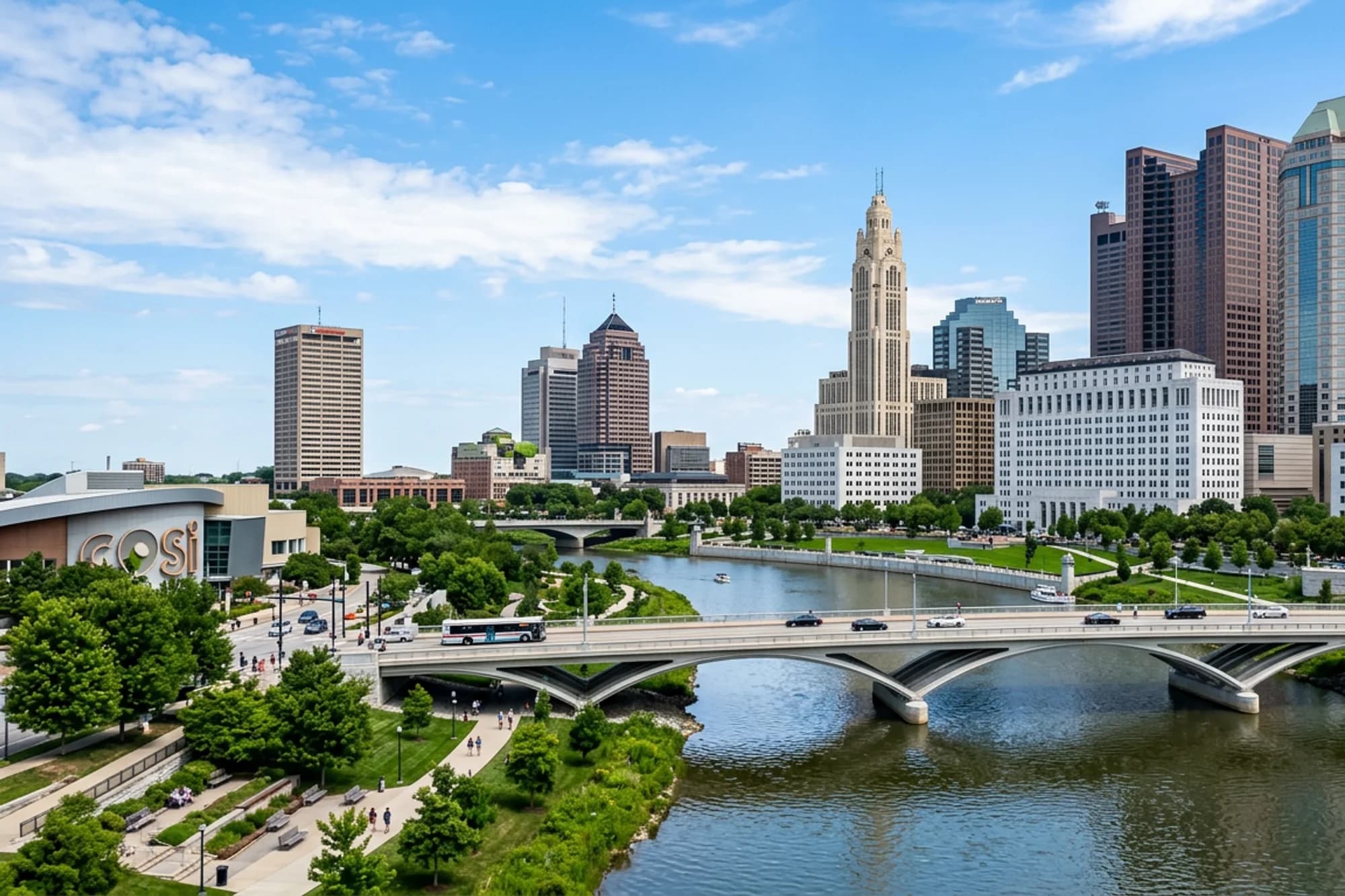
Columbus, Ohio downtown skyline and Scioto River
Connected acquisition flow
  1. Columbus identity
  2. Corridor policy
  3. Service-area fit
  4. Offer fit
  5. Qualification + response
  6. Booked in-fit work
  • Columbus-primary honesty
  • Corridors as qualified context
  • Fit before Central Ohio spend
  • Booked in-fit outcomes

Services

Services we run for Columbus service businesses

FueLLabs connects local visibility, paid demand, conversion pages, tracking, and follow-up so Columbus programs measure city–corridor-fit booked work—not every Central Ohio contact equally.

A Columbus, OH acquisition program should keep Columbus relevance clear, decide which Franklin County and growth-corridor zones crews can fulfill, and connect discovery to in-fit booked work—not every “Central Ohio,” Greater Columbus, or statewide Ohio inquiry. That usually means linking local SEO and reputation systems with Google Ads, conversion-focused landing pages, tracking, and lead response automation—without treating Franklin County suburbs as automatic Columbus coverage, without absorbing Cleveland or Northeast Ohio intent, and without treating manufacturing RFQ agencies, tourism, or med spa SEO as the primary ICP.

Channel priority when Columbus demand spans corridors

Maps, paid search, and pages should follow the Columbus and approved Franklin County corridor zones the operation can sustain—not undifferentiated Central Ohio breadth. City-named queries and suburb-corridor queries are not the same bookable map. Treat this mix as a planning framework for city–corridor fit, not a Map Pack guarantee or a promise that every Dublin, Westerville, or Hilliard job—or Delaware County expansion—is in scope.

Local SEO and GBP for durable city / corridor visibility

Google Business Profile hygiene, review velocity, and service-list clarity support Map Pack competition for home-service queries centered on Columbus and nearby corridors crews actually honor. Keep Columbus identity coherent when suburb modifiers appear—without stuffing every corridor name into thin doorway pages, and without claiming automatic Franklin County-wide coverage.

Google Ads for urgent demand with city–corridor geo controls

Paid search should capture high-intent Columbus and approved corridor queries when calendars can absorb them—especially urgent HVAC and plumbing paths—then use geo negatives, dayparting, and offer splits when capacity saturates. City core queries are not the same as Central Ohio or statewide Ohio catch-alls, and they should not absorb Cleveland or Northeast Ohio intent by default.

Landing pages, tracking, CRM, and missed-call infrastructure

Emergency service paths need call-first clarity and city/corridor honesty. Planned remodeling estimates and roofing replacements need different qualification and follow-up. Tracking should separate Columbus-core share, corridor share, and out-of-area waste. Lead response automation and CRM dispositions matter when urgent demand and Central Ohio spillover collide—so reporting separates in-fit booked work from metro inquiry noise. Expand campaigns only after capacity and serve-map review.

Local realities

Where Columbus service marketing breaks down

Columbus service businesses rarely stall because local demand disappears. They stall when campaigns treat Columbus and Central Ohio as one automatic map—or when Franklin County corridor labels and statewide Ohio packaging fill calendars with jobs crews cannot fulfill profitably—while office-trust SERPs and national city-swap templates distract from service-business buying intent.

  • Columbus and Central Ohio are sold as one map

    Ads, GBP, and landing pages collapse Columbus and Central Ohio into one automatic coverage claim. Buyers and ops then argue about travel time, ticket mix, and expectations before service fit is confirmed—while reporting still looks “local.”

  • Franklin suburb corridors treated as automatic coverage

    Dublin, Westerville, Hilliard, and similar corridor demand enters campaigns without a written serve policy—so dashboards look busy while bookable Columbus and approved-corridor work stays flat.

  • Statewide Ohio or Cleveland bleed fills the wrong funnel

    Statewide Ohio packaging and Northeast Ohio spillover pull Cleveland-area intent into Columbus campaigns. Lead quality suffers when Cuyahoga-first demand is treated as normal Columbus radius—and the Cleveland page is the wrong page for that thesis.

  • Urgent and planned demand share one funnel

    Emergency plumbing or HVAC calls collide with remodeling estimates and roofing replacements on the same landing and follow-up flow—so close rates weaken when offer fit and city/corridor capacity are unclear.

  • Map Pack visibility rises while after-hours calls still drop

    Local-result visibility can improve while phones still miss urgent inquiries. Reviews and GBP hygiene without speed-to-lead leave booked jobs on the table in competitive Columbus home-service markets.

  • Reporting celebrates leads, not corridor fit

    Wide geo settings and weak dispositions make Central Ohio spillover look like Columbus progress. Without Columbus-core share, corridor share, and out-of-area tags, spend and staffing decisions stay blind.

Industries

Service businesses we prioritize in Columbus

Framed for route-sensitive, call-driven, estimate-led, and appointment models—categories describe operating patterns, not claims of Columbus client coverage in every vertical.

Columbus trade patterns that change acquisition

These briefs describe operating models—not claims that FueLLabs already serves every Columbus trade from a local office or has clients in every listed vertical. Remodeling is highlighted because published related-work proof exists for geo-intent Google Ads discipline aimed at qualified quote requests.

HVAC — city density versus corridor drive-time capacity

HVAC often mixes repair urgency with replacement and maintenance paths. Columbus density and Franklin corridor drive time change which jobs are profitable on the same calendar day. Missed-call handling and city/corridor intake fields protect booked work when demand spikes collide with full crews. Start with our HVAC marketing guide.

Plumbing — emergency dispatch across city and corridor ZIPs

Plumbing demand is often emergency-now. Wrong ZIP dispatch between Columbus core and suburb corridors burns crew time before service fit is confirmed. Ads and GBP should emphasize call paths, while intake tags city versus corridor and recovers missed calls before out-of-area forms look like progress. See plumbing marketing.

Roofing — planned estimates with crew-day radius honesty

Roofing leans planned: inspection, estimate, and replacement windows. City access patterns and corridor crew-day radius are different constraints than a Central Ohio storm keyword set. Pages should qualify location and project type before quote ghosts fill the pipeline. See roofing marketing.

Remodeling and contractors — longer research, tighter fit filters

Remodeling and multi-trade contractor demand often research longer than emergency trades. Columbus projects and Franklin corridor jobs need different proof, estimate paths, and capacity honesty—without selling “all of Central Ohio” coverage crews cannot staff. See remodeling marketing and contractors marketing.

Local context

Columbus geography that should shape your serve map

Google Ads for Columbus service businesses should follow actual city and corridor coverage, service-specific intent, and whether the buyer is ready to call or request a quote. Keep location settings honest, review Central Ohio and Greater Columbus demand when operations do not support it, and feed accepted versus out-of-area outcomes back into optimization. Do not invent CPC, CPA, or metro benchmarks—and do not assume every business must cover all of Franklin County or confuse Columbus with Cleveland.

Landing pages should confirm Columbus or corridor context, capacity fit, offer, relevant proof, and factual credentials before asking for contact. Intake should collect enough location and service detail to route correctly without turning the public form into a metro geography quiz.

A qualified inquiry still needs fit-aware follow-up: confirmation, missed-call recovery, booking or quote scheduling, CRM stages for Columbus-core versus corridor versus out-of-area, and ownership when requests remain unfinished. Optimize toward booked in-fit work—not raw Central Ohio form volume. FueLLabs collaborates remotely and does not claim a physical Columbus office.

Landing pages should confirm city or corridor fit before the next step

Buyers need Columbus or approved corridor context, whether their location sits in an honored service set, whether the job type matches current capacity, relevant proof, and whether to call, book, or request a quote before they submit. A generic “contact us” page does not prepare a city–corridor-honest handoff—and it does not filter Central Ohio or statewide Ohio demand that operations will never fulfill.

Columbus versus Franklin corridors versus outer counties versus “near me”

City-named queries, suburb-corridor queries (for example Dublin, Westerville, Hilliard, Gahanna), Delaware or Fairfield spillover, emergency versus planned work, and “near me” results often resolve differently than a Columbus-branded Central Ohio campaign expects. Pages and ads should not pretend those intents share one automatic service map—and they must never treat Cleveland or Northeast Ohio as interchangeable with Columbus.

Questions the page should answer

Is this a Columbus-relevant service business for my location? Is my address in the city or in an approved corridor zone? Is the service available for my job type? Is the proof relevant? Should I call or request a quote? What happens after I submit?

Confirm service and location without a geography quiz

Service needed, city versus corridor where useful, residential or commercial context, urgency versus planned timing, and call versus quote preference support routing. Do not force customers to decode metro labels, and do not claim automatic coverage across all of Franklin County or Central Ohio.

Treat Central Ohio and Greater Columbus as optional labels—not automatic coverage

Central Ohio explains why search language feels regional; it does not authorize campaigns to treat every community as interchangeable with Columbus. Statewide Ohio and Northeast Ohio labels often outrun fit. Cleveland has its own authority page and is not absorbed here. Keep intake able to tag out-of-area inquiries separately.

Lead response needs city–corridor-aware handoff

Confirm receipt, recover missed calls, schedule bookings or quote steps, tag Columbus-core versus corridor versus out-of-area leads, stop irrelevant automation, and keep source attribution. Optimize toward booked in-fit work—not every Central Ohio form. Do not promise universal response times or booking guarantees.

Process

How we partner with Columbus operators remotely

A practical sequence focused on Columbus identity, corridor policy, channel alignment, intake, and booked in-fit outcomes before adding complexity.

  1. Define Columbus identity and bookable corridor policy

    Clarify Columbus positioning, Franklin County corridor serve / review / exclude zones, and which offers marketing may sell inside current crew capacity.

  2. Set outer-county, Central Ohio, and Cleveland exclusion rules

    Decide whether selected Delaware, Fairfield, or Licking demand is operationally real—and how ads, pages, and intake will filter Central Ohio and statewide spillover without absorbing Cleveland intent.

  3. Align channels and connect intake

    Align GBP, SEO, ads, landing pages, and proof; then improve location capture, confirmation, mismatch handling, missed-call recovery, and CRM ownership.

  4. Measure booked work by city and corridor fit

    Prioritize in-fit Columbus and corridor demand, booked jobs, accept/decline rates, out-of-area leakage, emergency/planned mix, and cost—not form volume alone.

First 90 days for a Columbus growth system

Sequence matters when Central Ohio and Greater Columbus language is broader than city–corridor capacity. This roadmap is a planning model—not a guaranteed timeline, SLA, or outcome.

Baseline city/corridor demand and service-map audit

  • Clarify Columbus positioning, Franklin County corridor serve / review / exclude zones, outer-county opt-in policy, emergency versus planned demand, and which offers marketing may sell inside current crew capacity—excluding Cleveland identity and statewide Ohio coverage as the page thesis.

Align discovery, pages, and tracking

  • Align GBP, local SEO, ads, landing pages, proof, and factual credentials so customers see one coherent city–corridor story—including separate paths for urgent versus planned demand where needed—and validate that tracking can report Columbus-core share, corridor share, and out-of-area rates.

Connect intake, response, and missed-call recovery

  • Connect location and service fields, calls, forms, CRM stages, out-of-area handling, and human review so usable demand reaches the right next step when city density and corridor drive time collide.

Measure booked work by city/corridor fit

  • Separate Columbus-core demand, approved corridor demand, outer-county opt-ins, out-of-area leakage, booked jobs, accept/decline rates, emergency/planned mix, and cost—rather than optimizing to blended Central Ohio inquiry volume alone.

Case study

Related proof: geo-intent discipline for service operators

Finished high-ticket kitchen remodel with marble island, dark cabinetry, and brass fixtures
Published related work · Austin, TX · Remodeling · Google Ads · Not Columbus resultsAustin, TXRemodeling

Remodeling — Google Ads for High-Ticket Project Leads

Intent separation and stricter geo targeting shifted budget toward full-gut and addition inquiries.

Client challenge

Low-ticket repair clicks consumed budget. Landing pages did not showcase portfolio depth.

Approach

We split repair vs remodel campaigns and built a portfolio-led landing narrative.

  • Qualified leads24 → 49+104%
  • CPL$212 → $124-42%
  • Avg project$21k → $27k+29%

Qualified leads doubled directionally while CPL improved.

Read the related remodeling Google Ads case study

Measurement

Measure Columbus success beyond more leads

Reporting categories we prioritize for city–corridor fit systems—these describe scope, not guaranteed results or universal Columbus benchmarks.

  • Qualified calls

    Contacts that match service and area filters—before treating every form as equal progress.

  • Booked jobs

    Progress into booked work—and completed jobs when systems support it—not form fills alone.

  • Columbus-core lead share

    Inquiries attributable to Columbus demand versus corridor or out-of-area sources.

  • Franklin/corridor lead share

    Approved corridor demand tracked separately from Columbus-core and from unapproved spillover.

  • Service-area match rate

    Inquiries inside current served Columbus and corridor zones versus out-of-area or requires-review leads.

  • Central Ohio / out-of-area waste

    Central Ohio, statewide, or distant spillover tagged separately from in-fit Columbus demand.

  • Cost per qualified lead

    Spend divided by qualified in-fit opportunities—not cost per any regional form.

  • Lead-to-booking rate

    Whether ops accepted and booked after city/corridor and service review—not every nearby lead as a win.

  • Missed-call recovery

    After-hours and peak recovery performance when urgent demand spikes.

  • Emergency vs planned mix + form quality

    Path mix and field completeness—without fabricated averages. Revenue attribution where the client provides data.

Service area

How we talk about Columbus coverage

We partner with service businesses whose brand and search demand center on Columbus, Ohio. Franklin County is county context and is not included by default as automatic coverage. Serving selected Dublin, Westerville, Worthington, Upper Arlington, Hilliard, Gahanna, Grove City, Reynoldsburg, New Albany, or Pickerington contexts does not make every Franklin corridor the same market as Columbus—and it does not invent FueLLabs city pages for those places.

Central Ohio and Greater Columbus language describe wider regional shorthand. That context helps explain why search language feels wide—it does not define FueLLabs coverage, a client’s operating territory, or automatic service across every community, Delaware County growth node, or Licking County cluster. Cleveland is not a Columbus service-area card. Actual coverage varies by client. FueLLabs does not claim a physical Columbus office.

Columbus remains this page’s market identity even when a business serves selected Franklin County corridors. Central Ohio and Greater Columbus language are explanatory only—they do not define FueLLabs coverage, a client’s operating territory, or automatic service across every community. Cleveland and Northeast Ohio intent belong on the Cleveland page when Cuyahoga seasonal-capacity fit is the thesis—not here as Columbus coverage. Related Midwest contrasts also include Indianapolis and Chicago. Browse the full Explore all markets hub for every published city guide.

Marketing geography, proof, and service claims should match the business’s actual operational position. Trade-specific licensing or permit questions require review with the relevant authority or qualified adviser—this page is not a legal or compliance guide. FueLLabs does not claim a physical Columbus office.

FAQ

Columbus questions operators ask

Do you have a Columbus office?

No. FueLLabs works with U.S. businesses remotely and does not represent this page as a physical Columbus office, storefront, GBP, or local walk-in team. Strategy is based on the client’s actual operating territory, services, customer journey, proof, acquisition data, and applicable business requirements.

Resources

Resources for Columbus service-business growth systems

Guides on local visibility, paid acquisition discipline, landing clarity, and lead response for service businesses competing on city–corridor fit and booked outcomes—not interchangeable Central Ohio claims.

These articles expand on local visibility, paid acquisition discipline, landing clarity, and lead response—useful reading before a strategy call. For published related work on geo-intent Google Ads discipline for remodeling quote requests (Austin, TX)—not Columbus client proof—see the remodeling Google Ads case study.

Connect Columbus Discovery to City–Corridor-Fit Booked Work

Evaluate whether Columbus identity is clear, whether ads and pages stay honest about Franklin County corridor policy, whether Central Ohio language is filtered correctly, whether Cleveland spillover is excluded from Columbus radius claims, whether intake confirms city/corridor and job fit, and whether booked in-fit outcomes are measured separately from raw regional inquiries—without treating the entire metro or state as automatic coverage.