
Competitive metros punish wasted clicks
When many operators bid the same repair and estimate terms, weak geo control and soft landing pages quietly inflate cost per qualified lead.
DALLAS DIGITAL MARKETING
Built for competitive Dallas service-area growth—where paid search, local visibility, landing pages, tracking, and follow-up need to work together so spend turns into qualified calls and booked work across the metro.

Local realities
Dallas service businesses rarely fail because they “need more traffic.” They fail when paid search, maps visibility, landing pages, tracking, and follow-up operate as separate tools in a metro where competition is dense and clicks are costly.
When many operators bid the same repair and estimate terms, weak geo control and soft landing pages quietly inflate cost per qualified lead.
Crews may serve Dallas plus nearby communities in one day, but ads and listings often claim a wider map than operations can honor—hurting conversion and reputation.
Search campaigns, GBP, and the website change on different calendars, so buyers see mismatched offers, proofs, and contact paths.
Expensive inquiries arrive after hours or during peak dispatch. Without routing and response discipline, competitors answer first.
Clicks and impressions look healthy while booked jobs stay flat—because calls, forms, and CRM outcomes were never connected.
Services
FueLLabs connects the channels that decide whether DFW demand becomes revenue—starting with the bottlenecks that waste spend first.
A Dallas acquisition program should tighten how spend turns into booked work—not add channels for their own sake. For many North Texas operators that means connecting Google Ads, local SEO and reputation systems, and conversion-focused websites with call/form tracking and lead follow-up so expensive clicks do not die in a slow inbox.
Paid search structured for Dallas call and quote intent—with geo discipline and message match instead of broad, leaky metro bids.
Explore Google Ads Management →Organic support for planned-demand services—so paid is not the only path to discovery across North Texas searches.
Explore SEO for U.S. Businesses →Maps visibility, review velocity, and profile hygiene for high-intent nearby searches across your real service radius.
Explore Local SEO & Reputation →Conversion-focused estimate and booking paths built for mobile service buyers—not brochure sites that stall paid traffic.
Explore Website Design & Landing Pages →Speed-to-lead workflows so missed calls and after-hours forms get a structured response before the next competitor answers.
Explore Lead Response Automation →Prioritize channel mix, service-map constraints, and measurement readiness before expanding budget.
Explore Strategy & U.S. Market Consulting →Also available
In a competitive DFW market, channels compete for the same budget unless each role is explicit. Use this mix as a planning lens—not a promise that every service launches on day one.
Search campaigns should protect quote and call intent with clear geo boundaries, strong negatives, and pages that match the offer—especially when competitors bid the same trade terms across Dallas and nearby suburbs.
GBP categories, reviews, and NAP consistency still matter when buyers compare providers on mobile. Local pages should support real service areas—not thin doorway variants for every suburb name.
Estimate and booking paths need mobile clarity, proof placement, and one primary action. Weak pages quietly raise cost per qualified lead even when ads look “optimized.”
After-hours forms and missed calls become competitor revenue when response is slow. Routing and automation should treat speed-to-lead as part of acquisition—not an operations afterthought.
Industries
Programs are scoped for operators whose growth depends on qualified local inquiries—not brand campaigns for national retail.
Seasonal and emergency search intent with geo and offer clarity that protects dispatch capacity.
View HVAC marketing →Call-driven demand that needs fast landing paths and qualification against junk traffic.
View Plumbing marketing →Estimate-led inquiries where proof, storm response messaging, and lead quality matter as much as volume.
View Roofing marketing →Longer consideration cycles with landing pages that move buyers toward booked consultations.
View Remodeling marketing →High-intent service calls that reward tight ad/page match and reliable follow-up.
View Electrical marketing →Route and subscription models that need clear service-area messaging and booking friction reduction.
View Cleaning & landscaping marketing →Appointment-led local brands where creative, radius, and booking CTAs work alongside search.
View Beauty & med spa marketing →Priority order depends on lead economics and buying path—not a one-size channel pitch. These briefs describe typical starting points for North Texas operators.
High-intent search and maps capture often come first, then landing pages that separate emergency vs. planned work. Tracking must distinguish junk calls from jobs you actually accept. See our HVAC marketing playbook and plumbing marketing page for trade-specific framing.
Qualification and proof matter as much as volume. Ad groups and pages should filter for project fit while local visibility supports research-stage buyers. Our remodeling marketing guide outlines how estimate-led offers typically convert.
Recurring or route-based services often need clearer service-area messaging, simpler booking paths, and follow-up that protects margins when paid competition rises.
Where discovery leans social and visual, Meta can fill weekday capacity when creative, radius, and booking CTAs stay disciplined. For published Dallas related work, review our nail salon Meta Ads case study.
Local context
Dallas is a large, contested acquisition market for service businesses. Growth usually depends on connecting paid search efficiency, local SEO and GBP visibility, conversion-focused pages, tracking, and CRM follow-up—not launching one channel in isolation.
We collaborate remotely with operators whose crews and calendars already define a real North Texas radius. Messaging, geo targets, and landing paths should match that radius without thin suburb-doorway pages or unsupported “local office” claims.
Programs treat measurement as a gate before scale: qualified calls, forms, and booked outcomes guide where budget expands next.
Buyers comparing Dallas service providers mix map results, paid listings, and mobile landing pages in the same session. Programs should assume that comparison—not a single “brand visit.”
A homeowner in Plano or Irving may still evaluate providers who list Dallas on their ad or GBP. Geo messaging should match where crews actually arrive—without inventing a separate thin page for every ZIP.
When search terms imply urgent repair or estimate requests, wasted clicks get expensive quickly. Conversion pages and negatives often protect performance more than incremental bid increases.
Reviews, service clarity, and mobile-ready CTAs influence who wins once multiple options appear. Paid traffic without trust and response speed quietly funds competitor calendars.
Process
A practical sequence focused on bottlenecks—visibility, conversion, tracking, and response—before adding complexity.
Review service map, channel mix, landing friction, tracking gaps, and follow-up speed against competitive DFW pressure.
Stabilize paid efficiency, local visibility, or conversion paths first—whichever is wasting the most qualified demand.
Align message match, geo rules, and routing so inquiries can be measured as booked-work outcomes.
Expand budget and coverage only where qualified cost and close signals remain acceptable.
Sequence matters in competitive metros. This roadmap is a planning model—not a guaranteed timeline or outcome.
Clarify service radius, offer priority, tracking gaps, and whether paid, organic, or conversion repair is the first bottleneck.
Align landing message match, geo targets, GBP hygiene, and lead routing so spend and search presence feed the same qualification rules.
Iterate on campaigns and pages using booked-work signals—not vanity clicks—then expand only where efficiency holds.
Case study

A cleaner hierarchy, proof-first layout, and mobile-first flow turned more traffic into booked estimates.
Above-the-fold messaging was vague and duplicated across services. Mobile CTAs competed and forms were long.
We mapped intent by service line, tightened copy, and reduced friction on the primary conversion path.
More quote requests from the same traffic with lower bounce and higher CVR.
Read the contractor website case studyMeasurement
Reporting categories we prioritize for service businesses—these describe scope, not guaranteed results.
Tracked phone conversations tied to campaign, keyword, or page source.
Estimate and contact submissions with spam filtering where practical.
Scheduled work marked as outcomes—not raw lead volume alone.
Spend divided by leads that meet your acceptance rules.
Share of visitors completing the primary call or form action.
Time from inquiry to first meaningful response across business hours and after hours.
Service area
We partner with service businesses whose dispatch maps center on Dallas and nearby North Texas communities—aligned to the radius you can honor, not a generic “all of DFW” claim.
Suburb-aware relevance belongs in geo targets, GBP settings, and landing clarity. We do not recommend thin, duplicated city pages for every neighborhood name, and we do not claim a Dallas storefront or walk-in office.
Many Dallas operators cover neighborhoods and adjacent suburbs in a single day. Marketing should reflect that radius in ads, local listings, and landing copy—without doorway pages that dilute relevance. Related Texas markets with their own guides include Houston, Austin, and nearby Arlington. Browse the full Explore all markets hub for every published city guide.
FAQ
Yes. We collaborate remotely with U.S. service businesses whose growth depends on local acquisition—including operators serving Dallas and nearby North Texas communities. This page explains how we approach competitive metro systems; engagements are scoped around your service map and bottlenecks.
Resources
Guides on paid search discipline, landing conversion, and measurement for competitive service-business markets.
These articles expand on paid search discipline, landing conversion, and measurement—useful reading before a strategy call. For a Dallas website conversion example, see related work on our contractor website redesign case study.

The biggest Google Ads mistakes we see in audits and the operating model that fixes wasted spend.
Read google ads guide →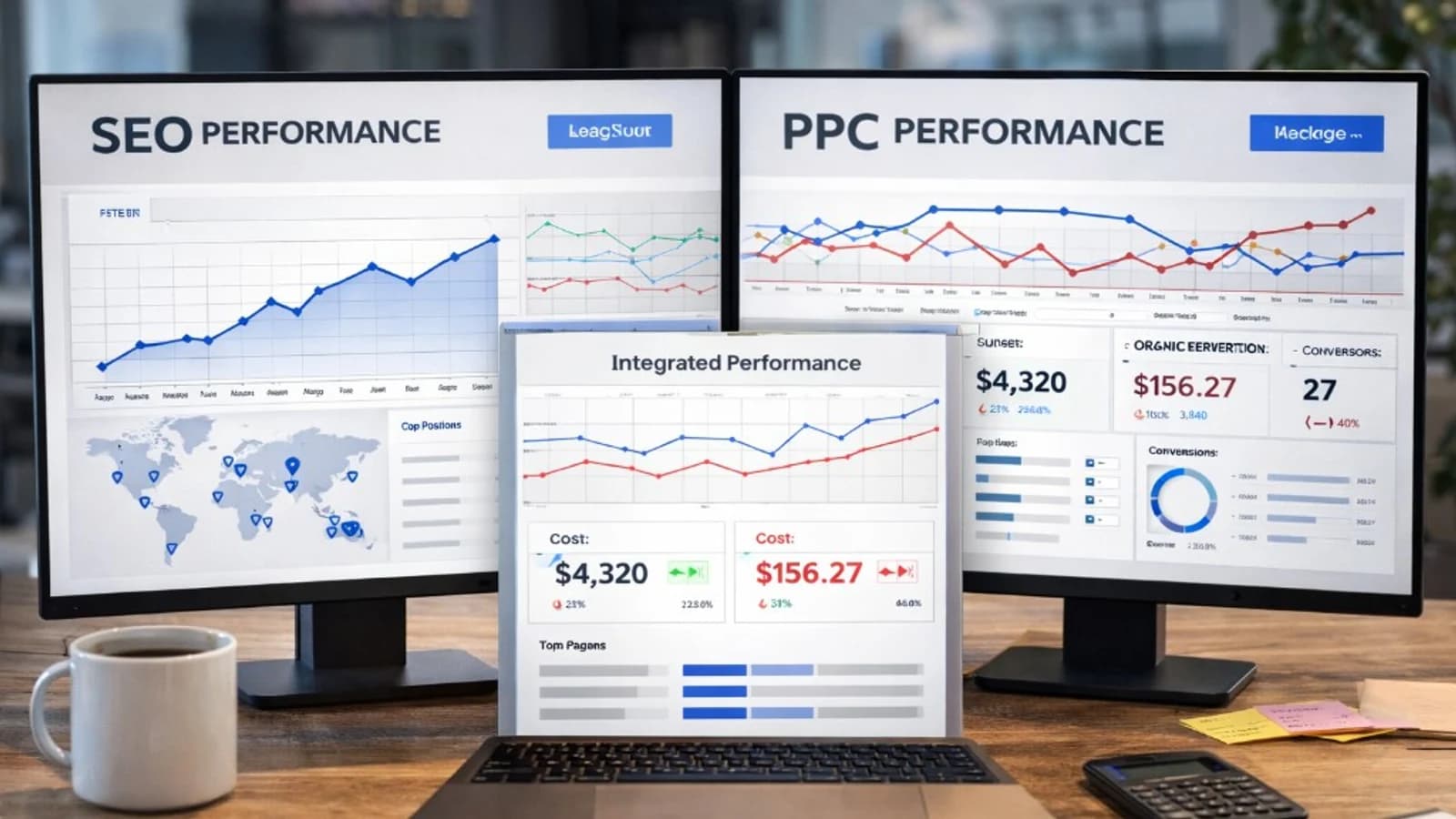
Why most paid campaigns underperform until landing pages match buyer intent and reduce friction.
Read website & cro guide →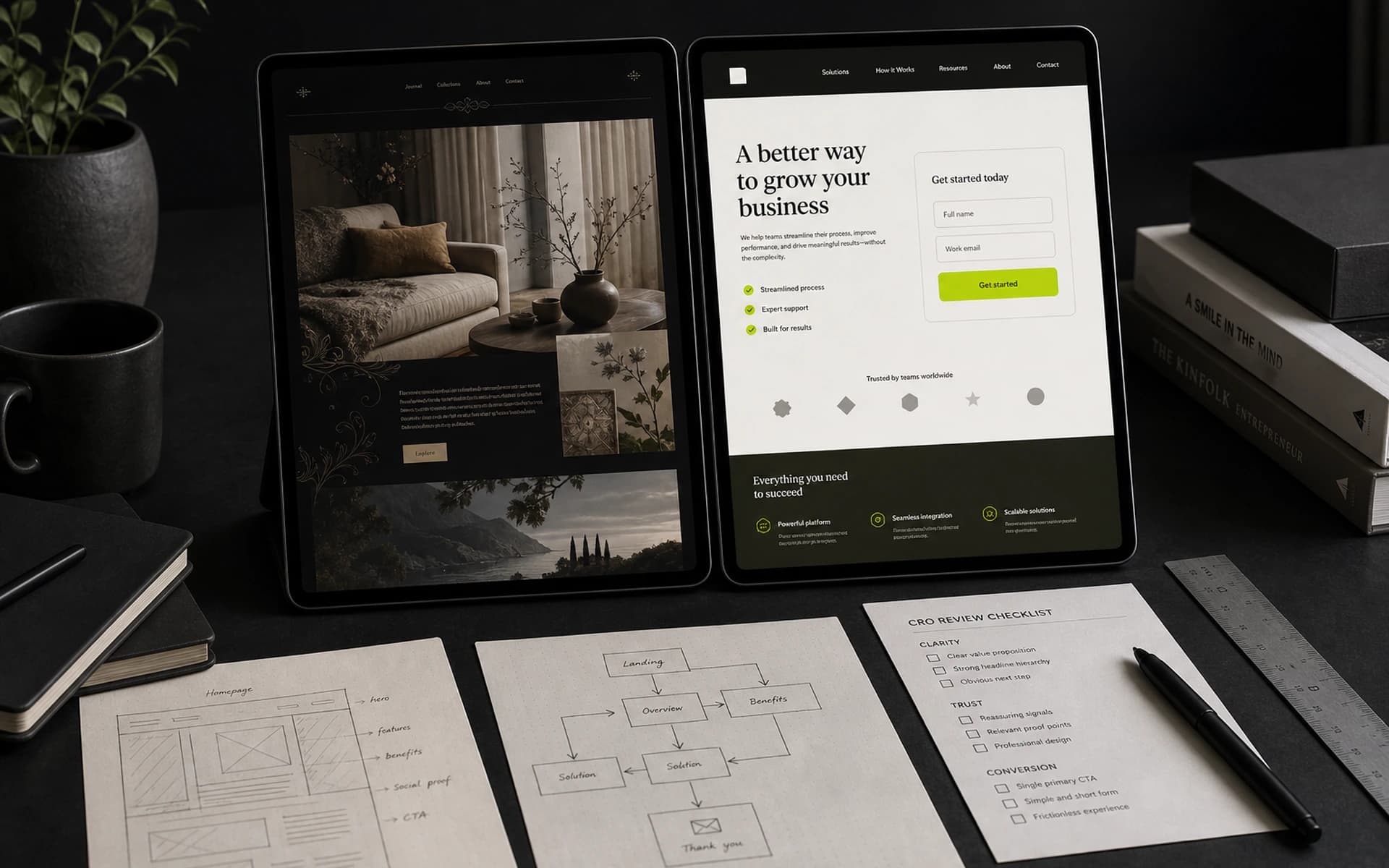
Design quality matters, but conversion architecture determines whether your site actually drives revenue.
Read website & cro guide →
A practical local SEO playbook for service brands that want qualified calls, not vanity traffic.
Read local seo & reputation guide →
Without clean tracking, optimization becomes guesswork and growth decisions get expensive fast.
Read strategy & growth guide →
How to move from campaign experiments to a repeatable lead engine your team can scale confidently.
Read strategy & growth guide →Map visibility, landing conversion, tracking, follow-up speed, and wasted paid clicks against how you compete across Dallas and nearby suburbs—then decide what to fix first.