Industry Growth

Barbershop MarketingBuilt AroundQualified Bookings& Repeat Client Growth

Attract stronger local demand, turn more high-intent prospects into booked appointments, improve chair utilization, and build clearer visibility from first booking to repeat customer value — aligned with real barber capacity.

  1. More qualified booking opportunities
  2. Better chair utilization
  3. Stronger repeat-client visibility
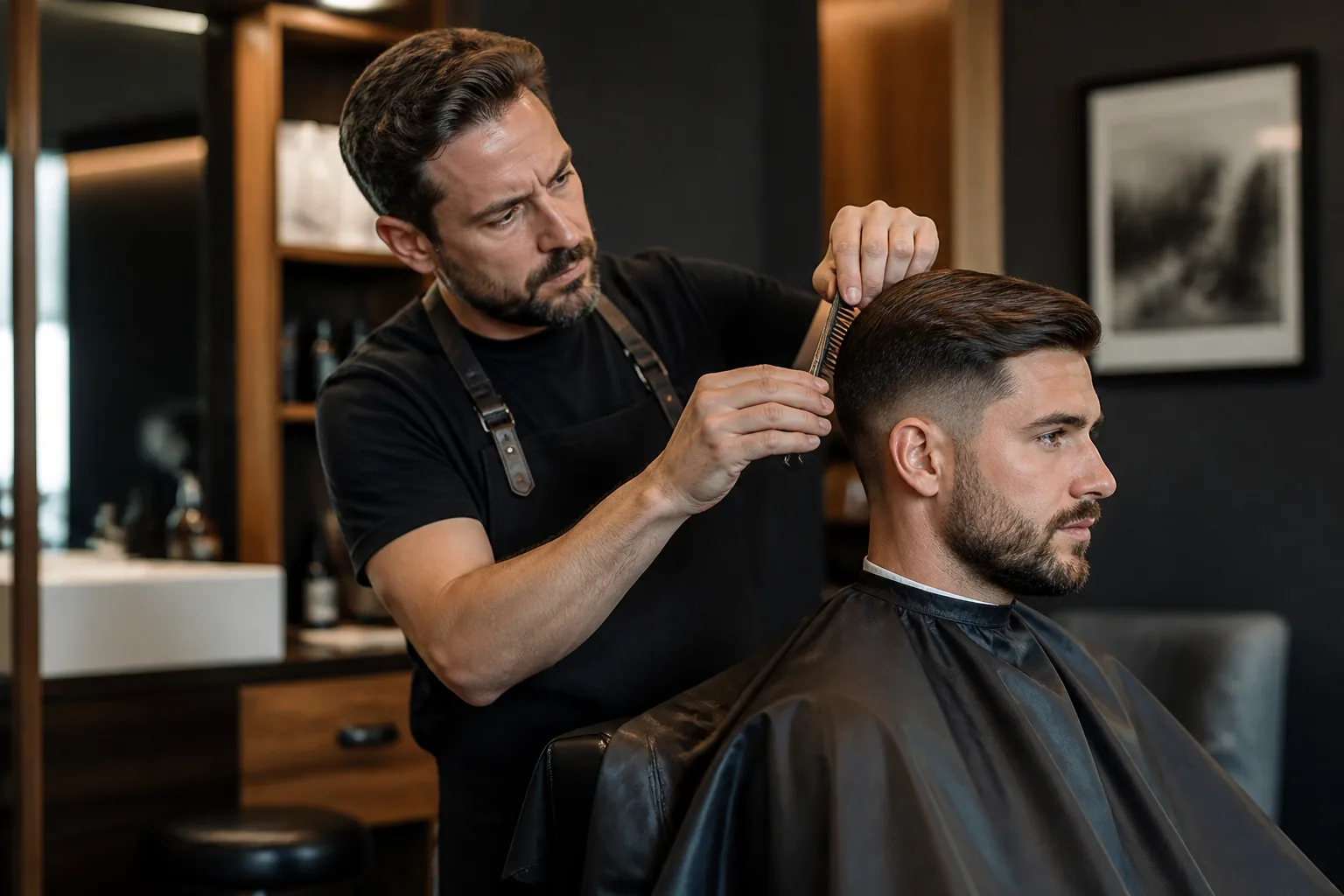
Barber giving a client a haircut in a premium barbershop interior
  1. Local Intent
  2. Booked Chair
  3. Attended Service
  4. Rebooking
Business Context

Barbershop growth depends on more than appointment volume.

One booking is not automatically equally valuable. Sustainable growth connects suitable local demand to service and barber fit, available chair capacity, a quality booking, an attended cut, rebooking, and longer-term client value. A full calendar can still be poorly optimized if demand lands on the wrong services, wrong time windows, or produces weak repeat behavior.

Chair Economics Engine

  1. Local Demand
  2. Service Fit
  3. Chair Capacity
  4. Booking Conversion
  5. Attendance
  6. Rebooking
  7. Sustainable Client Value

Capacity & Offer

  • Service type and mix

    Haircuts, beard work, premium grooming, packages, and memberships where offered — and which lines carry strategic value.

  • Service price and margin

    Whether demand concentrates in higher-value services or only low-ticket, promo-driven visits.

  • Barber availability

    Which barbers can take work by day, skill set, and appointment length.

  • Chair capacity

    How many chairs and appointment windows can actually absorb demand without idle gaps or overload.

  • Appointment duration

    How service length affects booking density, turnover, and absorbable demand.

Client Behavior

  • Walk-in share

    How much revenue depends on unpredictable walk-in traffic versus booked demand.

  • No-shows and cancellations

    How much booked chair time is lost before an attended appointment.

  • First-time vs repeat clients

    Whether acquisition produces one-time visits or recurring haircut cadence.

  • Rebooking rate

    Whether clients return on a predictable grooming cycle after the first visit.

  • Client lifetime value

    The value of attended and repeat appointments over time where data allows.

Growth Bottlenecks

Where barbershop booking momentum and client value break down.

These are diagnostic possibilities across demand, discovery, conversion, operations, retention, and measurement — not assumptions that every shop has the same problem or that another ad channel is automatically the answer.

Booking Leakage Map

Leak point

  1. Demand

    • Dependence on walk-in traffic and weak weekday demand
    • Promo-driven or seasonal demand that does not fill priority chairs
  2. Discovery

    • Weak Google Maps visibility in competitive local markets
    • Poor local organic coverage for nearby grooming searches
  3. Conversion

    • Mobile booking friction and unclear service options
    • Weak booking CTAs or slow inquiry response where applicable
  4. Operations

    • Demand disconnected from barber and chair capacity
    • No-show and cancellation leakage that wastes chair time
  5. Retention

    • Weak rebooking process after attended cuts
    • Little follow-up between visits or memberships where offered
  6. Measurement

    • Tracking that stops at lead or first booking
    • No source-to-attended or repeat-client visibility
Diagnosis

Identify where bookings, chair utilization, and repeat-client value leak before scaling.

We inspect the full demand-to-rebooking system so the highest-leverage constraint is visible before adding another channel or increasing spend.

Barbershop Growth Audit

21 checkpoints4 audit columns

01

Acquisition

9

Demand entering the shop

Demand

  • Walk-in versus booked demand balance
  • Weekday and time-window demand gaps
  • Promo-driven versus value-led demand

Visibility

  • Google Maps and local presence
  • Organic local discovery
  • Paid coverage for high-intent grooming searches

Conversion

  • Service and barber positioning clarity
  • Mobile booking usability
  • Trust signals and booking CTA quality
02

Operations

6

Chair time and return flow

Booking

  • Availability and chair visibility
  • Confirmation and reminder flow
  • No-show and cancellation handling

Retention

  • Rebooking pathways after attended cuts
  • Follow-up between visits
  • Memberships or packages where applicable
03

Economics

3

Mix, utilization, cost

Economics

  • Service mix and margin
  • Chair and barber utilization
  • Acquisition cost relative to repeat value
04

Measurement

3

What can be verified

Measurement

  • Source attribution
  • Booked versus attended appointment status
  • Repeat-client reporting where systems allow

Diagnostic checkpoints only — the constraint is located before spend or channels expand.

Growth Opportunity

The opportunity is not simply more barbershop traffic.

Each stage has a different job. Improving the whole customer pathway usually matters more than maximizing clicks, followers, or first-time visits at the top.

Capacity Climb

Capture → Convert → Complete → Return → Measure

  1. Local Demand
  2. Booking Quality
  3. Attendance
  4. Rebooking
  5. Client Value
  1. 01

    Capture

    High-intent local demand

    • Reach nearby appointment-ready grooming intent
    • Strengthen Maps and local search
    • Promote priority services and barbers where offered
    • Reduce low-fit promotional traffic where possible
  2. 02

    Convert

    Right booked appointment

    • Clarify service and barber fit early
    • Strengthen service pages and booking CTAs
    • Reduce mobile booking friction
  3. 03

    Complete

    Attended work that fills chairs

    • Improve confirmation and attendance workflows
    • Align demand with barber and chair capacity
  4. 04

    Return

    Clearer rebooking path

    • Support rebooking after attended cuts
    • Connect source to attended and repeat outcomes
  5. 05

    Measure

    Acquisition tied to client value

    • Connect source to booking status
    • Review chair utilization signals
    • Review repeat value where systems allow

Repeat Client Value

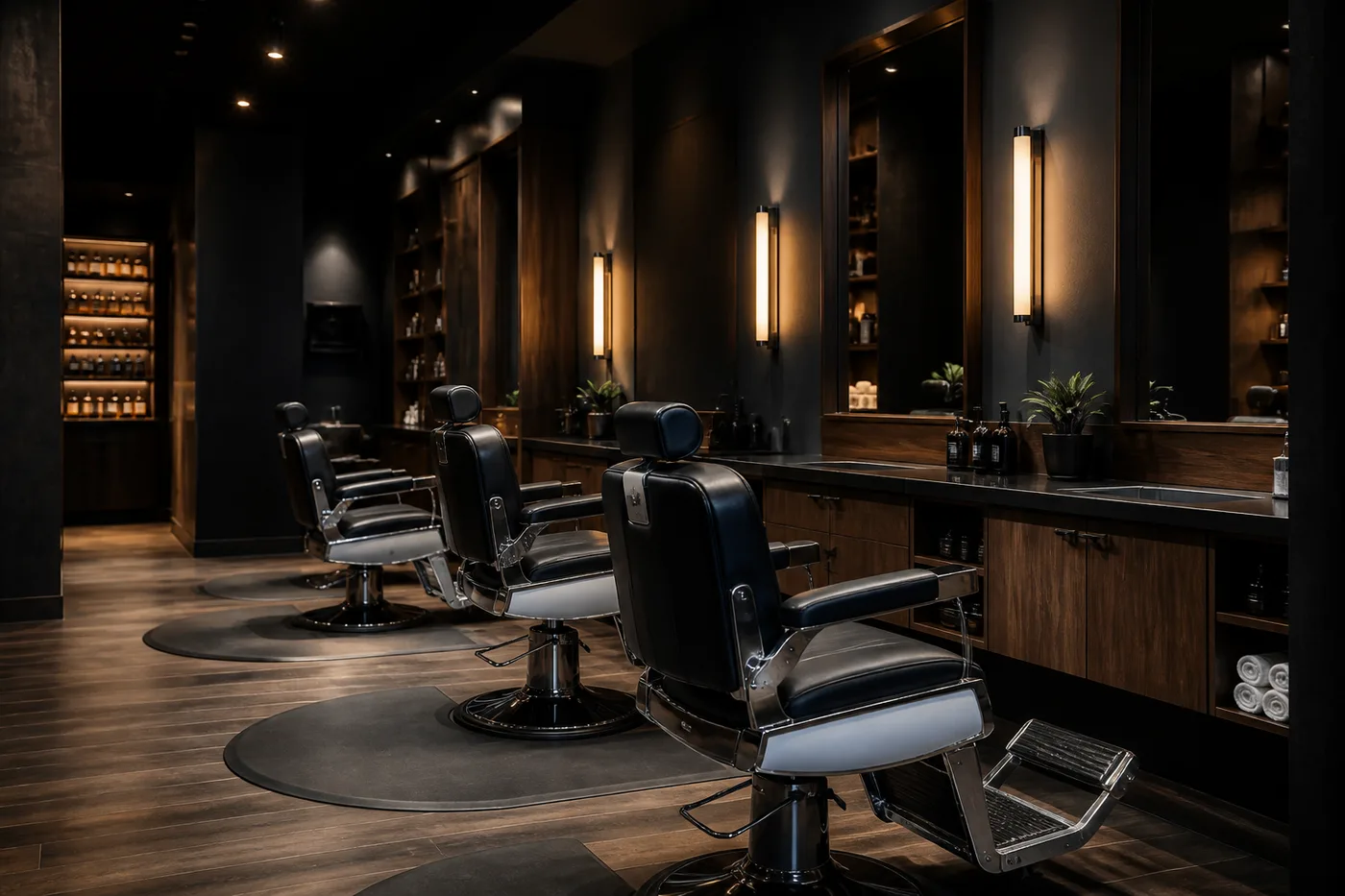
Barbershop station with chair, mirror, and tools prepared for the next appointment
Chair station in view
Growth Strategy

A barbershop growth system should connect demand, booking, and retention.

Channels are selected only after service mix, booking quality, chair capacity, and economics are clear — not as a default Google Ads plus Meta Ads stack.

Barbershop Growth Control System

Barbershop Growth System

01

Acquire

Demand in
  • Capture Qualified Local Demand

    Focus acquisition on nearby high-intent grooming demand through Search, Maps, local SEO, and paid social only where appropriate.

  • Improve Service Positioning

    Make haircuts, beard services, premium grooming, packages, and memberships clear where offered so interest matches what the shop wants to fill.

02

Convert & Utilize

Chair time used
  • Improve Booking Conversion

    Strengthen booking UX, service pages, CTAs, and mobile experience so high-intent demand becomes the right booked appointment.

  • Align Demand With Chair Capacity

    Direct demand toward useful time windows, barber availability, service duration, and chairs the shop can actually serve.

03

Retain & Scale

Value compounding
  • Improve Rebooking & Follow-Up

    Build clearer rebooking prompts, client communication, reminder flows, and CRM support where appropriate.

  • Measure Downstream Value

    Review marketing against booked appointments, attended cuts, repeat behavior, and client value — not traffic alone.

  • Prioritize Economics Before Scale

    Expand investment only where demand quality, capacity, and acquisition economics support it.

How the System Works

Turning local grooming demand into repeat-client value.

The pathway connects discovery, conversion, service delivery, retention, and business outcome — not a stack of identical cards.

Stage width reflects how much of the pathway each phase carries — not five equal steps.

  1. 013 steps

    Discovery

    • Local need or grooming intent
    • Search, Maps, ads, social, or referral discovery
    • Shop and service comparison
  2. 023 steps

    Conversion

    • Service or location page visit
    • Service or barber selection
    • Booking action and confirmation
  3. 033 steps

    Service Delivery

    • Pre-appointment communication
    • Appointment attended
    • Next-visit discussion where appropriate
  4. 043 steps

    Retention

    • Rebooking or follow-up after the cut
    • Return visit on grooming cadence
    • Membership or package continuity where offered
  5. 053 steps

    Business Outcome

    • Repeat-client pattern
    • Chair utilization contribution
    • Client value where measurable
Execution

What FuelLabs can implement for barbershop growth.

Execution layers support the growth system. Scope depends on market, services, capacity, and current platforms — and does not promise integrations every shop can support.

Barbershop Acquisition Stack

Discovery sits on top — measurement and strategy carry the load underneath.

Local demand enters here

  1. 01

    Acquisition

    Demand surface

    Capture suitable local demand across the channels that fit the market and service mix.

  2. 02

    Conversion

    Booking surface

    Improve websites, service pages, landing pages, offer positioning, and mobile booking conversion paths.

  3. 03

    Response / Retention

    Response surface

    Support inquiry handling, reminders, rebooking communication, and follow-up workflows where systems allow.

  4. 04

    Measurement

    Signal base

    Define tracking from traffic through bookings, attendance, and repeat value where systems allow.

  5. 05

    Strategy

    Structural base

    Prioritize services, chair capacity, market opportunity, and economics before scaling.

Measurement and strategy hold the stack up

Measurement

Measure more than leads and first bookings.

Downstream metrics become more useful as booking, CRM, and analytics integrations allow. Coverage depends on client systems and data quality. FuelLabs does not invent benchmark values.

  • Seat
  • Show
  • Rebook

Downstream Value Ladder

  1. Traffic
  2. Booking Action
  3. Qualified Booking
  4. Appointment Booked
  5. Appointment Attended
  6. Rebooked Client
  7. Repeat Client Value

Lower rungs sit closer to real shop value, so they carry more weight here — and depend most on booking and CRM access.

Business Outcomes

The business outcomes a stronger barbershop growth system should support.

Outcomes are framed as improvement goals. Results vary by market, offer, creative, booking experience, capacity, and data quality. FuelLabs does not guarantee bookings, rankings, or ROI.

Shop Performance Field

Three bands of the same shop day — not three equal boxes.

  1. Front of shop

    Booking quality

    Work toward more qualified booked appointments, less low-fit demand, and stronger premium-service demand where those services are offered.

  2. Behind the chair

    Operating quality

    Work toward better chair utilization, fewer weak time windows, and clearer alignment with barber availability.

  3. After the cut

    Client value

    Work toward more repeat customers, stronger rebooking visibility, and better understanding of client value where systems allow.

Economic visibilityWork toward a clearer view of attendance, service mix, chair contribution, and acquisition cost where data permits.

How We Work

Strategy before channels.

We do not start by asking whether you should run Meta Ads. We start with where growth is constrained — then select the channel or system that addresses that constraint.

Iterative Operating Loop

The work switches sides each stage and re-enters at the top after every cycle.

  1. 01

    Diagnose

    Understand market, economics, current acquisition, booking flow, capacity, and tracking.

  2. 02

    Prioritize

    Identify the highest-leverage growth constraint.

  3. 03

    Build

    Implement the required acquisition, conversion, response, or measurement system.

  4. 04

    Measure

    Review downstream booking and client-quality signals.

  5. 05

    Refine

    Improve weak stages based on evidence.

  6. 06

    Scale

    Increase investment only where economics and capacity support it.

Each cycle re-enters at Diagnose with what the last cycle proved

Why FuelLabs

A methodology built around accountable local growth.

Barbershops work with FuelLabs for a transparent process — not manufactured badges, inflated ratings, or unrealistic guarantees.

See Barbershop Case Study

Operating principles

  1. Strategy before channels

    Recommendations begin with the business model, service mix, chair capacity, and the constraint.

  2. Economics before scaling

    Inquiry volume is evaluated alongside booking quality, attendance, utilization, and rebooking.

  3. Local-business specialization

    Plans reflect competitive barbershop markets, walk-in dynamics, and appointment economics — not generic national playbooks.

  4. Acquisition + conversion integration

    Traffic, service positioning, booking UX, and response are treated as one system.

  5. Transparent measurement

    We distinguish what can be tracked from what cannot yet be verified.

  6. No unrealistic guarantees

    Plans are framed as testable work toward improvement, not promised bookings, rankings, or ROI.

Market Coverage

Local strategy for competitive U.S. barbershop markets.

Barbershop acquisition is highly local. Neighborhood search behavior, Google Maps density, service radius, nearby competitors, pricing, and customer demographics all shape which services, channels, and booking paths deserve priority.

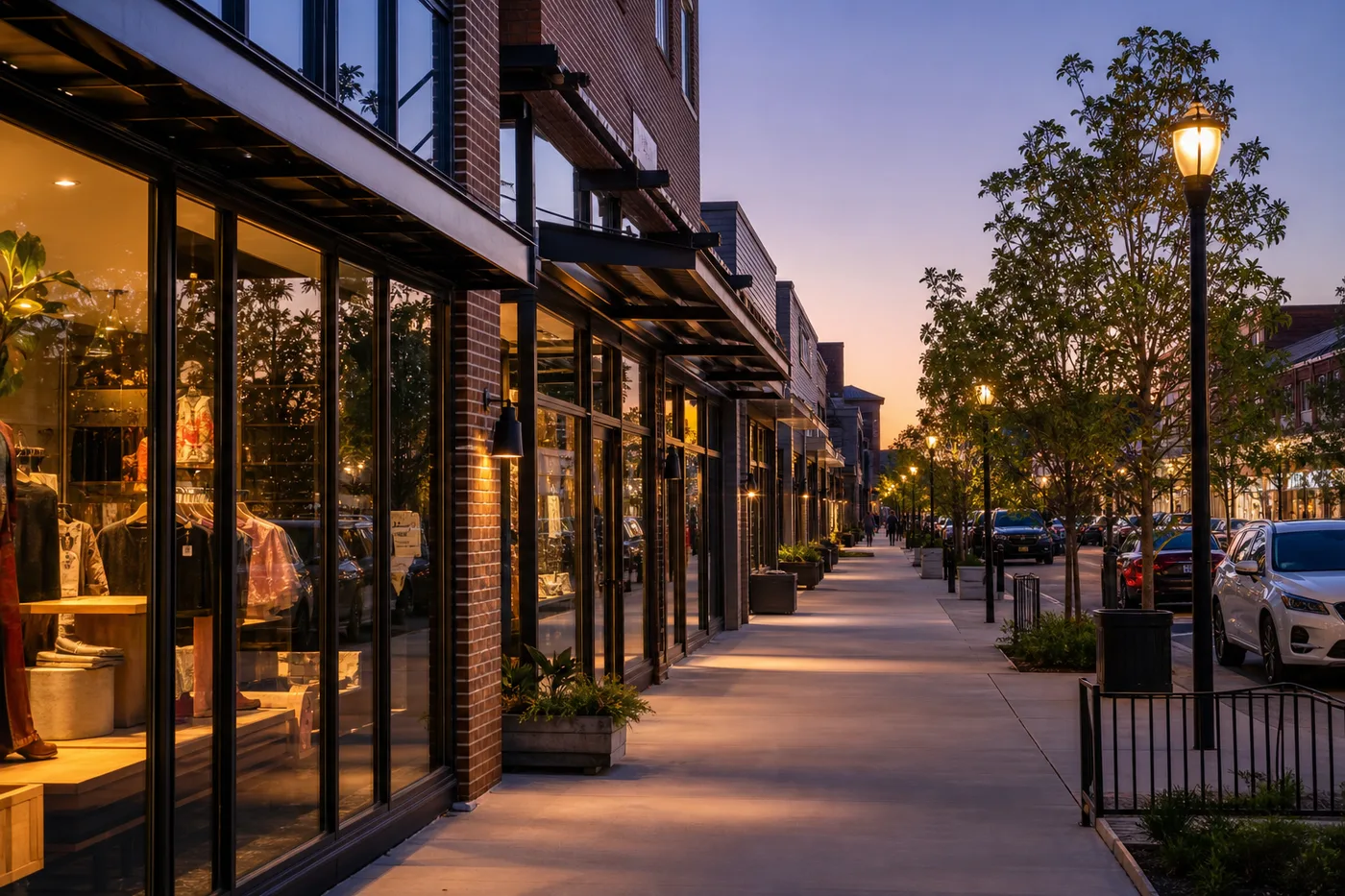
Walkable urban commercial neighborhood representing competitive local barbershop markets
One corridor, one pin — every market reads differently
  • Maps density

    How many shops compete for the same neighborhood pin

  • Search intent

    Whether nearby searches are ready to book or just browsing

  • Service radius

    How far a client will realistically travel for a cut

  • Price band

    Where local pricing sits and which services carry value

Market coverage

Location pages represent FuelLabs market coverage, not offices or barbershop clients in every city.

View All Locations
Who This Is For

This approach is a strong fit for barbershops that…

Not every shop is a fit. The framework works best when acquisition goals and operating readiness can move together. It is less useful when there is no available service capacity or no ability to manage incoming demand.

Barbershop Growth Readiness

Marketing readiness

  • You want more predictable appointment demand and less dependence on walk-ins.
  • You want stronger weekday utilization and clearer visibility into empty chair time.

Operating readiness

  • You want to grow repeat clients and promote specific premium services where offered.
  • You can improve booking, response, or rebooking systems and are willing to measure attended appointments and repeat behavior where possible.

Shop types this fits

  • Independent barbershops
  • Multi-chair barbershops
  • Premium grooming studios
  • Appointment-first and hybrid walk-in shops
  • Multi-location barbershop brands
FAQ

Barbershop marketing questions.

Straight answers about bookings, chair utilization, local channels, and measurement.

Questions
13
Scope
Local demand to chair value

It can connect local demand strategy, paid and organic visibility, service positioning, booking conversion, follow-up, and measurement. Scope should reflect your market, services, capacity, and current systems.

Yes, when the goal is to add booked demand around walk-in flow — not replace operations overnight. Strategy should respect how the shop currently fills chairs. Outcomes still vary by market and capacity.

By improving the pathway from local demand to confirmed and attended appointments — including visibility, service clarity, booking UX, and capacity alignment. FuelLabs does not guarantee booking volume.

By directing demand toward underfilled days, barbers, and service windows the shop can actually serve — rather than pushing more volume into already full periods. Results depend on real capacity and booking systems.

Clearer rebooking pathways, follow-up after attended cuts, and better visibility into repeat outcomes where systems allow can all help. Retention also depends on service experience. Repeat bookings are not guaranteed.

It can capture high-intent searches when targeting, service structure, landing pages, and conversion tracking are well aligned. It is not automatically the right channel for every market or every service line.

Maps and local visibility often matter because nearby clients compare shops. Strength depends on competition density, relevance, distance, and review signals — not a single ranking promise.

Sometimes, when creative, audience approach, and landing experience support the shop’s offers — including memberships or premium services where relevant. Meta is never assumed to be appropriate for every shop.

Yes, by clarifying service-line fit — haircuts, beard work, premium packages, and memberships where offered — and prioritizing demand that matches those services rather than leading only with discounts.

Campaign timing, geography, service focus, and budget should reflect real barber availability, appointment duration, and chair capacity. Driving demand into fully booked windows while other chairs stay idle can create waste.

Useful stages include qualified booking opportunities, appointments booked, attendance, no-shows, service mix, chair utilization signals, rebooking, and client-value visibility where systems permit reliable attribution.

Where booking and analytics systems allow, tracking can extend beyond leads into booked and attended status. Coverage depends on platform access and data quality. Perfect attribution is not always possible.

Timelines vary by market competition, baseline visibility, creative and landing quality, booking friction, and capacity. Some channels can produce inquiry activity relatively quickly; durable booking quality and retention usually take longer. FuelLabs does not promise specific timelines or results.

Barbershop chair and station prepared for the next booked appointment
  1. BOOK
  2. ATTEND
  3. REBOOK
  4. VALUE
Next Step

Build a barbershop growth system around better bookings, better chair utilization, and stronger repeat-client value.

FuelLabs can help connect local acquisition, booking conversion, client follow-up, and measurement into a clearer growth system built around your shop’s real capacity and economics.