
Industry Growth

Beauty Salon Marketing
Built for
High-Value Bookings
& Repeat Client Growth

Attract stronger local demand, improve booking quality, reduce dependence on discount-driven leads, and build clearer visibility from marketing activity into attended appointments, repeat bookings, and client value — aligned with real salon capacity.
  • More qualified booking opportunities
  • Stronger premium-service demand
  • Better repeat-client visibility
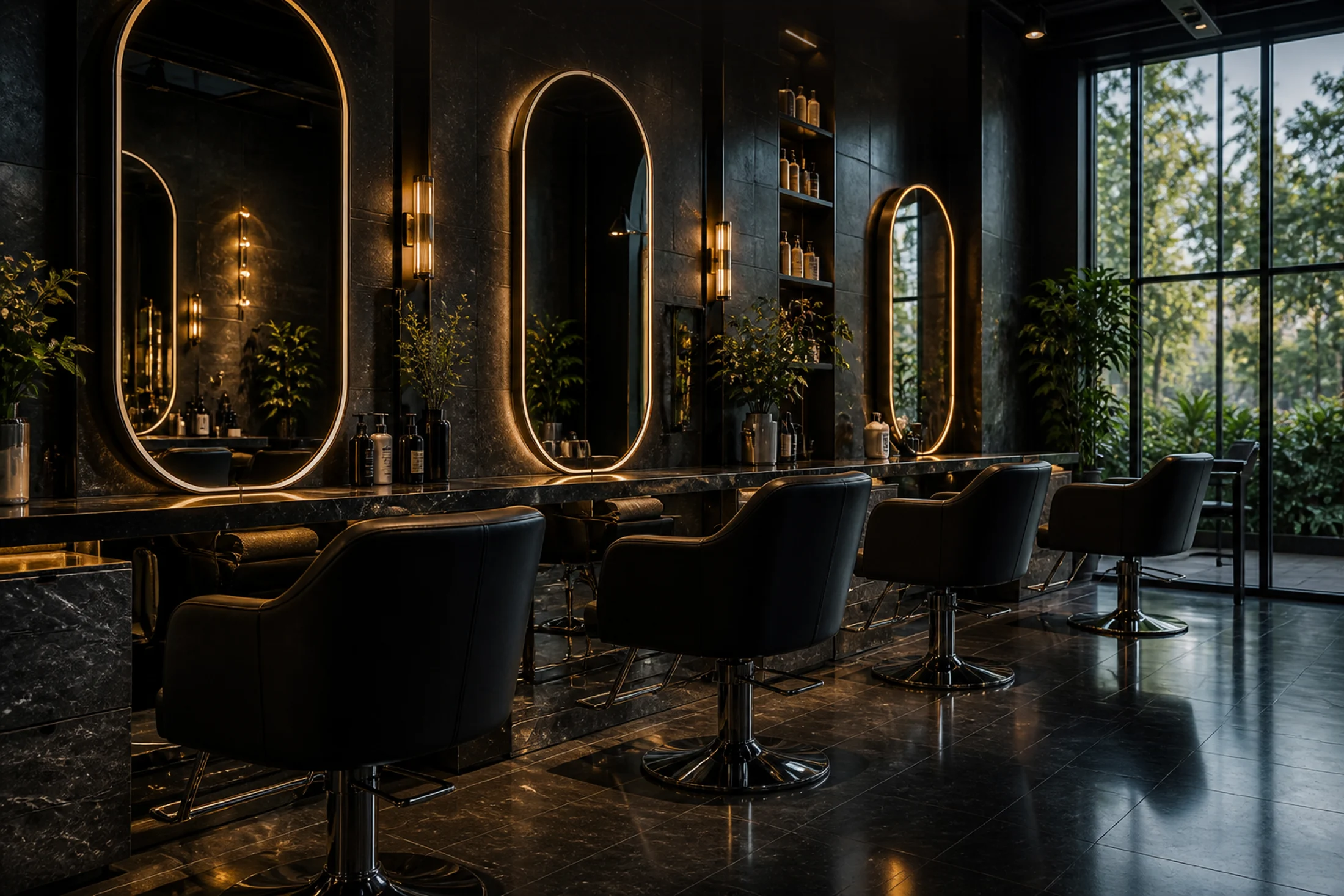
Modern beauty salon interior representing beauty salon marketing and client booking growth
  1. Local IntentLocal salon demand
  2. Booked AppointmentQualified booking
  3. Attended ServiceCompleted visit
  4. RebookingRepeat-client path

Built around salon economics

  • Local Demand
  • Booking Quality
  • Attendance
  • Rebooking
  • Client Value

Tools We Use

  • Google Ads — paid search and performance advertising platform
  • Google Analytics — web and conversion analytics platform
  • Google Business Profile — local listings and map visibility platform
  • Meta — Facebook and Instagram advertising platform
  • CallRail — call tracking and lead attribution platform
  • HighLevel — CRM and marketing automation platform
Business Context

Beauty salon growth depends on more than new appointments.

A first booking is the beginning of the relationship, not the full business outcome. Sustainable salon growth connects suitable local demand to service fit, a quality booking, an attended appointment, rebooking, capacity utilization, and longer-term client value.

Salon Value Engine

  1. Local Demand
  2. Service Fit
  3. Booking Quality
  4. Appointment Attendance
  5. Rebooking
  6. Sustainable Client Value

Result: Sustainable Client Value

Operating drivers

  1. Service mix

    Which services are offered, how they are packaged, and which lines carry the most strategic value for the salon.

  2. Average service value

    Whether demand is concentrated in premium services, add-ons, and higher-ticket packages—or only low-ticket, discount-driven visits.

  3. Provider capacity

    Available stylist and provider schedule capacity by day, service type, and location.

  4. Booking conversion

    How clearly visitors move from interest to a booked appointment without unnecessary friction.

  5. Attendance

    How much booked schedule capacity is lost to no-shows, late cancellations, and weak confirmation habits.

  6. Rebooking

    Whether clients return for maintenance visits, complementary services, and ongoing relationships.

  7. Local market fit

    How well positioning, pricing, and service lines match nearby demand and competitive alternatives.

  8. Acquisition economics

    Whether acquisition cost can be reviewed against booked appointments, attended visits, rebooking, and client value where systems allow.

Growth Bottlenecks

Where booking momentum and client value break down.

These are operating constraints across demand, booking, attendance, and return—not assumptions about which advertising channel to add next.

Booking Leakage Map

  1. Demand

    • Inconsistent local demand beyond social spikes
    • Overdependence on Instagram or promotional bursts
    • Discount-driven traffic that underrepresents premium services
    • Weak visibility for strategic service lines
  2. Booking

    • Confusing service selection on site or booking tools
    • Mobile booking friction
    • Slow inquiry response
    • Weak Google Maps and local discovery
  3. Attendance

    • Cancellations and no-shows that waste chair time
    • Unclear confirmations and reminders
    • Poor appointment qualification before the visit
  4. Return

    • Weak rebooking process after the first visit
    • Acquisition disconnected from repeat behavior
    • No visibility into client lifetime value by source
    • Campaigns optimized only for first visits
Diagnosis

Before scaling marketing, identify where booking and retention opportunities leak.

We inspect the full demand-to-rebooking system so the highest-leverage constraint is visible across acquisition and operating health.

Salon Growth Diagnostic Board

Acquisition Health

Demand · Visibility · Positioning · Conversion

  • Demand

    • Local service intent
    • Premium versus discount-driven searches
    • Seasonality and competitive demand
  • Visibility

    • Google Maps and local pack presence
    • Organic local discovery
    • Paid coverage for high-intent service searches
  • Positioning

    • Service-line clarity
    • Premium offer communication
    • Differentiation without discount dependence
  • Conversion

    • Landing and service-page clarity
    • Mobile booking experience
    • Call-to-action and booking-path strength
Constraint

Growth Constraint

Highest-leverage constraint across acquisition and operating health.

Salon Operating Health

Booking · Attendance · Retention · Economics · Measurement

  • Booking

    • Inquiry and booking friction
    • Response speed
    • Service selection and scheduling clarity
  • Attendance

    • Confirmation workflow
    • Reminder cadence
    • No-show and late-cancellation patterns
  • Retention

    • Rebooking pathways
    • Maintenance and follow-up communication
    • Repeat-visit experience loops
  • Economics

    • Acquisition cost visibility
    • Service-mix contribution
    • Capacity utilization versus spend
  • Measurement

    • Source attribution
    • Booked and attended appointment status
    • Rebooking and client-value reporting where systems allow
Growth Opportunity

The opportunity is not simply more salon traffic.

Each stage has a different job. Improving the whole pathway matters more than maximizing visits at the top.
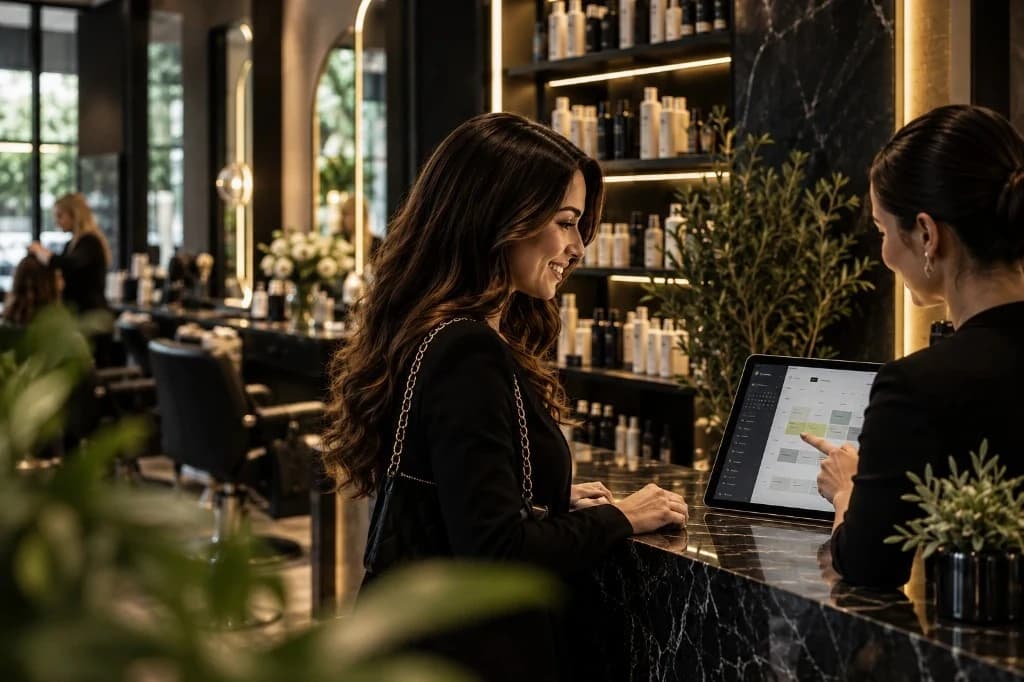
Beauty salon client reviewing an appointment schedule with salon staff
  1. 01Local IntentRelevant local demand
  2. 02Booked AppointmentService and time confirmed
  3. 03Attended ServiceAppointment completed
  4. 04RebookingRepeat-client pathway
  1. Capture
  2. Convert
  3. Complete
  4. Return

Capture

  • Prioritize booking-ready local intent
  • Strengthen Maps, local search, and service discovery
  • Reduce low-fit or discount-only demand where possible

Convert

  • Clarify service-line fit early
  • Strengthen service pages and booking CTAs
  • Reduce mobile booking and response friction

Complete

  • Improve confirmation and attendance workflows
  • Align demand with stylist and chair capacity

Return

  • Support rebooking after completed services
  • Connect source to attended and repeat outcomes where systems allow
Growth Strategy

Strategic pillars for sustainable beauty salon growth.

The operating model is Acquire, Convert, and Retain. Channels are selected only after service mix, booking quality, capacity, and economics are clear.

Control

Salon Growth Control System

  • Demand
  • Booking
  • Capacity
  • Retention

Acquire

Demand
  1. Capture High-Intent Local Demand

    Focus acquisition on people actively looking for salon services nearby—not broad beauty browsing alone.

  2. Strengthen Service-Line Positioning

    Make premium services, packages, and specialty offerings clear so booking interest matches what the salon actually wants to fill.

  3. Improve Local Search & Maps Visibility

    Support discovery where nearby clients compare salon options on Google, Maps, and related local surfaces.

Convert

Booking
  1. Improve Booking Conversion

    Make the path from service interest to a booked appointment clear, trustworthy, and low-friction on mobile.

  2. Improve Response & Follow-Up

    Reduce delays and missed opportunities between inquiry, confirmation, attendance, and rebooking.

Retain & Scale

Capacity · Retention
  1. Align Acquisition With Salon Capacity

    Direct demand toward useful days, providers, and service lines the salon can actually serve.

  2. Measure Attended & Repeat Client Outcomes

    Look beyond leads to booked and attended appointments, rebooking, and client value where systems support it.

Booking & Retention System

Turning local salon demand into repeat-client opportunities.

The journey is grouped around decisions the prospect and salon make—not a promise that every inquiry becomes a high-value repeat client.

  1. Discovery

    • Local need for a salon service
    • Google, Maps, social, ads, or referral discovery
    • Salon and service comparison
  2. Conversion

    • Service-page visit
    • Call, online booking, or form inquiry
    • Service selection and booking path
  3. Appointment

    • Appointment booked
    • Confirmation and reminders
    • Appointment attended
  4. Retention

    • Rebooking opportunity
    • Maintenance or complementary service follow-up
    • Repeat visit pathway
  5. Business Value

    • Booking quality pattern
    • Schedule utilization
    • Repeat value and revenue visibility where measurable
Execution

What FuelLabs can build around the salon growth system.

Execution combines discovery, conversion, response, and measurement around the priorities found in diagnosis.

Salon acquisition stack

Layered panels · discovery through strategy

  1. Discovery

    Capture suitable local demand across the channels that fit the market and service mix.

  2. Conversion

    Improve websites, service pages, landing pages, and booking-focused conversion paths.

  3. Response

    Support faster inquiry handling, reminders, and follow-up workflows around bookings and rebooking.

  4. Measurement

    Define tracking and attribution from traffic through bookings, attendance, rebooking, and client value where systems allow.

  5. Strategy

    Prioritize service mix, salon capacity, market opportunity, and economics before scaling.

Measurement

Measure beyond clicks and appointment requests.

Reporting depth depends on the booking, CRM, scheduling, and analytics systems available. FuelLabs does not invent metrics the salon cannot support. Downstream stages matter more than top-of-funnel traffic alone.

Downstream value rail

  1. Traffic
  2. Inquiry
  3. Qualified Booking Opportunity
  4. Appointment Booked
  5. Appointment Attended
  6. Rebooking
  7. Client Value

Metrics where systems allow

  • Cost per inquiry
  • Cost per qualified inquiry
  • Booking rate
  • Cost per booking
  • Show rate
  • Cancellation / no-show rate
  • Average ticket
  • Rebooking rate
  • Repeat-client value
  • Revenue by source where attribution is possible
Business Outcomes

What a stronger salon acquisition system is designed to improve.

These are operating objectives, not guarantees of bookings, rankings, revenue, retention rates, or return on investment.

Better Fit
Better Utilization
Better Repeat Value

Designed to improve

Booking Quality

  • More relevant appointment opportunities
  • Stronger premium-service mix
  • Less discount-only demand

Designed to improve

Schedule Quality

  • Better booking conversion
  • Stronger attendance
  • Improved stylist and chair utilization

Designed to improve

Client Value

  • Stronger rebooking
  • Better repeat-client visibility
  • Clearer acquisition economics
Process

Build the system before increasing spend.

A low cost per lead is not, by itself, a reason to increase spend. We first examine booking quality, attendance, capacity, rebooking pathways, and measurement readiness.

Progressive decision path

  1. 01Primary gate

    Diagnose

    Map demand, service mix, booking flow, capacity, retention, and available data.

  2. 02Unlocks next

    Prioritize

    Rank constraints by likely business impact and feasibility.

  3. 03Unlocks next

    Build

    Implement the selected discovery, conversion, response, and measurement layers.

  4. 04Primary gate

    Measure

    Review movement through booked, attended, and rebooking stages.

  5. 05Unlocks next

    Refine

    Adjust messages, targeting, booking paths, and workflows based on evidence.

  6. 06Unlocks next

    Scale

    Expand only where demand quality, capacity, and economics are aligned.

Why FuelLabs

A methodology built for accountable local growth.

Salons work with FuelLabs for a transparent process—not manufactured badges, inflated claims, or unrealistic guarantees.

Explore Case Studies
  1. Strategy before channels

    Recommendations begin with the business model, service mix, and the constraint.

  2. Economics before scaling

    Inquiry volume is evaluated alongside booking quality, attendance, capacity, and rebooking.

  3. Local-market specialization

    Plans reflect competitive beauty markets, local radius, and service-line demand—not generic national playbooks.

  4. Conversion + acquisition integration

    Traffic, service positioning, booking UX, and response are treated as one system.

  5. Transparent measurement

    We distinguish what can be tracked from what cannot yet be verified.

  6. No unrealistic guarantees

    Plans are framed as testable work toward improvement, not promised bookings, rankings, or ROI.

Market Coverage

Local strategy for competitive U.S. beauty markets

Local radius, competitor density, and search behavior shape which services, channels, and booking paths deserve priority in each market.

Modern U.S. urban retail corridor at dusk
Local signals
  • SEARCH
  • MAPS
  • SERVICE AREA
  • LOCAL FIT

Market coverage

Location pages represent FuelLabs market coverage, not offices or beauty salon clients in every city.

View All Locations
Who This Is For

This approach is a strong fit for beauty salons that…

Not every salon is a fit. The framework works best when acquisition goals and operating readiness can move together.

Salon growth readiness profile

Capacity · Booking · Return
  • Single-location beauty salons
  • Multi-stylist salons
  • Boutique premium salons
  • Multi-location salon brands
FAQ

Beauty salon marketing questions.

Straight answers about bookings, local channels, capacity, and measurement.

12 questionsBookings → retention

It can connect local demand strategy, paid and organic visibility, service-line positioning, booking conversion, follow-up, and measurement. Scope should reflect your market, services, capacity, and current systems.

By prioritizing higher-intent local demand, clarifying premium service fit, and reducing discount-only inquiry patterns where possible. Results vary by market, offer, creative, landing experience, and booking process. FuelLabs does not guarantee booking volume or client value.

By strengthening service-line positioning, targeting booking-ready local intent, and improving conversion paths that explain value without leading with discounts. Discount dependence is not always eliminated, and outcomes are not guaranteed.

It can capture high-intent searches when targeting, service structure, landing pages, and conversion tracking are well aligned. It is not automatically the right channel for every market or every service line.

Sometimes, when creative standards, audience approach, and landing experience support the salon’s offers. Meta can help with awareness and demand generation, but it is never assumed to be appropriate for every salon.

Local visibility is often important because prospects commonly compare nearby options. Google Business Profile relevance, local pages, service information, and a legitimate reputation process can support discovery without guaranteeing rankings.

Yes, when the salon offers them. Positioning should reflect real service differences and capacity. Not every service line deserves equal spend in every market.

Campaign timing, geography, service focus, and budget should reflect real stylist availability. Driving demand into fully booked windows while other schedules remain open can create waste and a poor client experience.

Useful stages include qualified booking opportunities, appointments booked, attended appointments, cancellations, rebooking, and client-value visibility where systems permit reliable attribution.

Where booking, CRM, and analytics systems allow, marketing activity can be connected to booked and attended appointment status. Coverage depends on platform integrations and data quality. Attendance outcomes are not guaranteed.

Clearer rebooking pathways, follow-up after completed services, and better visibility into repeat outcomes where systems allow can all help. Retention also depends on service experience. Repeat bookings are not guaranteed.

Yes. The framework can support independent salons, multi-stylist teams, boutique premium concepts, and multi-location brands, with strategy adjusted to capacity and operating complexity.

Beauty salon appointment station prepared for a client visit
  1. BOOK
  2. ATTEND
  3. RETURN
  4. VALUE
Next Step

Build a beauty salon growth system around better bookings and stronger repeat-client value.

FuelLabs can help connect local acquisition, service positioning, booking conversion, follow-up, and measurement into a clearer growth system built around your salon’s capacity and economics.